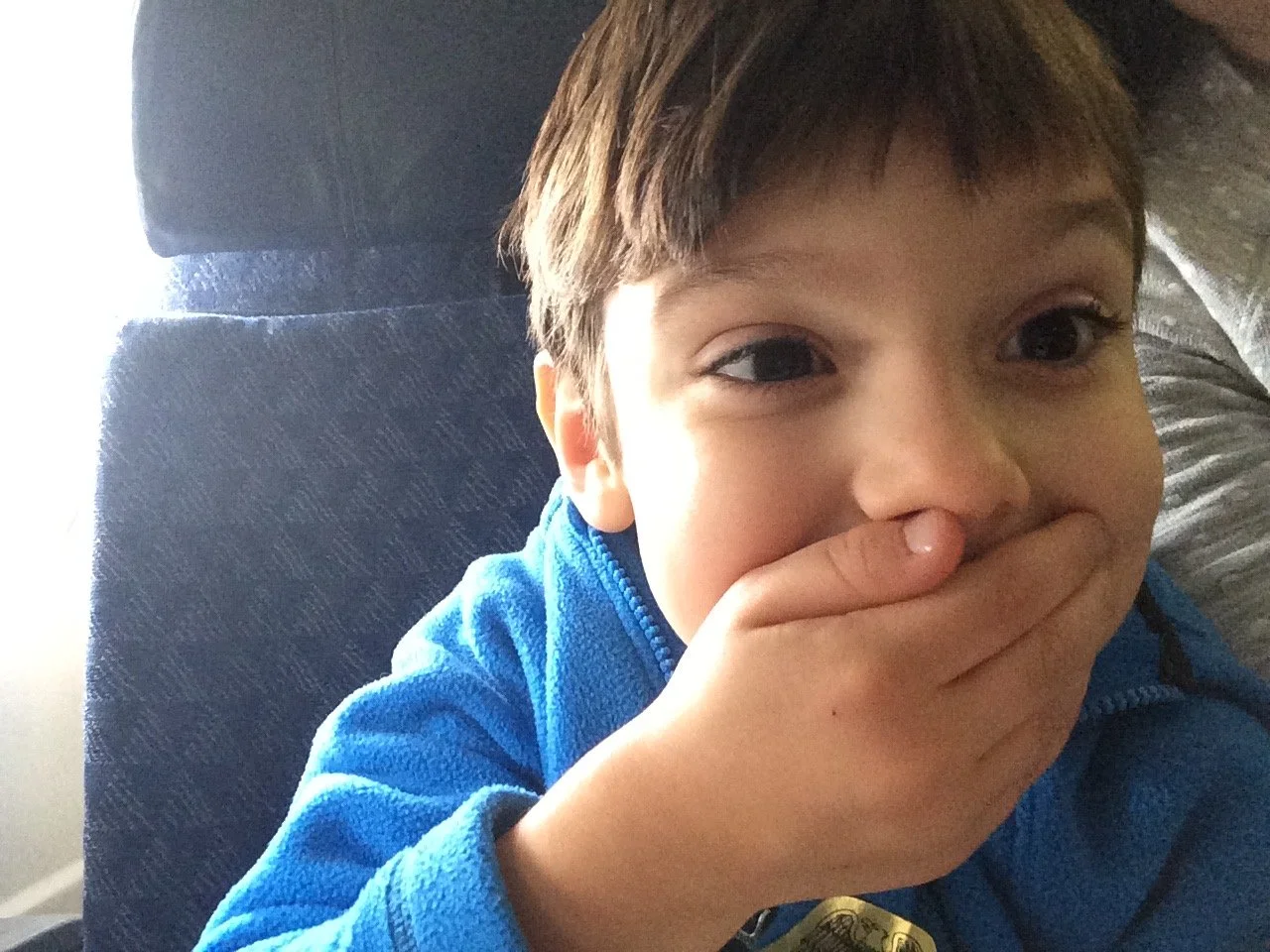
Traveling with a Child Who Has Sensory Differences
When my oldest son was young, traveling felt overwhelming long before we ever reached our destination.
There were crowded airports, long lines, unfamiliar sounds, bright lights, changes in routine, and hours spent waiting. While many children find travel exciting, my son often experienced it differently. His nervous system was constantly processing more information than most people realized.
At the time, I didn’t have all the answers. I wasn’t searching for perfection. I was simply trying to understand what helped him feel safe, calm, and engaged.
Over the years, whether we were flying from Florida to Chicago or traveling overseas to the Azores, I learned that successful travel wasn’t about keeping him busy every minute. It was about helping him stay regulated.
Every child is different, but these are some of the strategies that helped our family.
Preparing Ahead with Social Stories
One of the most helpful tools we used before traveling was a social story.
Rather than waiting until we arrived at the airport, we began talking about the trip days or even weeks in advance. Social stories helped my son understand what to expect, reduced uncertainty, and gave him time to process each step before experiencing it in real life.
We would review pictures of the airport, security checkpoints, waiting areas, airplanes, and even the destination itself. Some airports and organizations provide ready-made social stories, but you can also create your own using photos, simple drawings, or pictures from the internet.
If possible, include details such as:
* Where you will park
* How luggage is checked
* What happens at security
* Where you will wait before boarding
* What the inside of the airplane looks like
* What your child can do while waiting
* What will happen when you arrive
The goal is not to eliminate every challenge. The goal is to replace some of the uncertainty with familiarity.
For many children with sensory differences, knowing what comes next can make a world of difference.
Start with Understanding, Not Compliance
An important lesson I learned was that behavior is communication.
When my son became restless, emotional, withdrawn, or overwhelmed, he wasn’t trying to be difficult. More often than not, he was communicating that the environment was becoming too much for his nervous system.
Once I shifted my focus from trying to stop the behavior to understanding what was causing it, everything changed.
Instead of asking, “How do I get him to sit still?”
I began asking, “What does he need right now?”
Reducing Sensory Overload
Airports can be challenging environments for children with sensory differences.
Announcements echo overhead. Crowds move in every direction. Rolling suitcases create constant background noise. Bright lights, unfamiliar smells, and unexpected schedule changes can quickly become overwhelming.
One of the most helpful tools we used was noise-canceling headphones.
The headphones gave my son a way to reduce incoming auditory information and create a quieter space within a busy environment. They became a familiar source of comfort during travel and helped him participate without becoming overwhelmed.
Sometimes supporting a child means adding something helpful. Other times it means reducing the amount of information their brain has to process.
Creating a Travel Activity Toolkit
One of my favorite travel strategies was packing multiple small activity bags.
Rather than handing my son a large collection of toys all at once, I packed individual activities separately and introduced them one at a time.
When his interest began to fade, I simply brought out a new activity.
Some of his favorites included:
Matchbox cars and portable car sets
Small magnetic building toys
Stickers and themed background pages
Coloring supplies
Animal stamps
Small sensory toys
Books featuring his favorite interests which happened to be the Titanic, shipwrecks, and construction sites.
The novelty of each new activity often bought another ten to fifteen minutes of engagement.
That may not sound like much, but those minutes add up during a long flight.
When we ran through all the activities, we simply started again.
Bringing Familiar Comforts
Whenever possible, I packed items that helped my son feel secure at home.
One of those items was a weighted blanket.
Deep pressure can be calming for many children, and having something familiar available during travel helped provide comfort in unfamiliar surroundings.
A favorite stuffed animal, familiar blanket, or preferred pillow may seem like small things, but they can make a big difference when routines change.
Using Visual Calming Tools
One of my son’s favorite calming tools was a simple liquid motion timer.
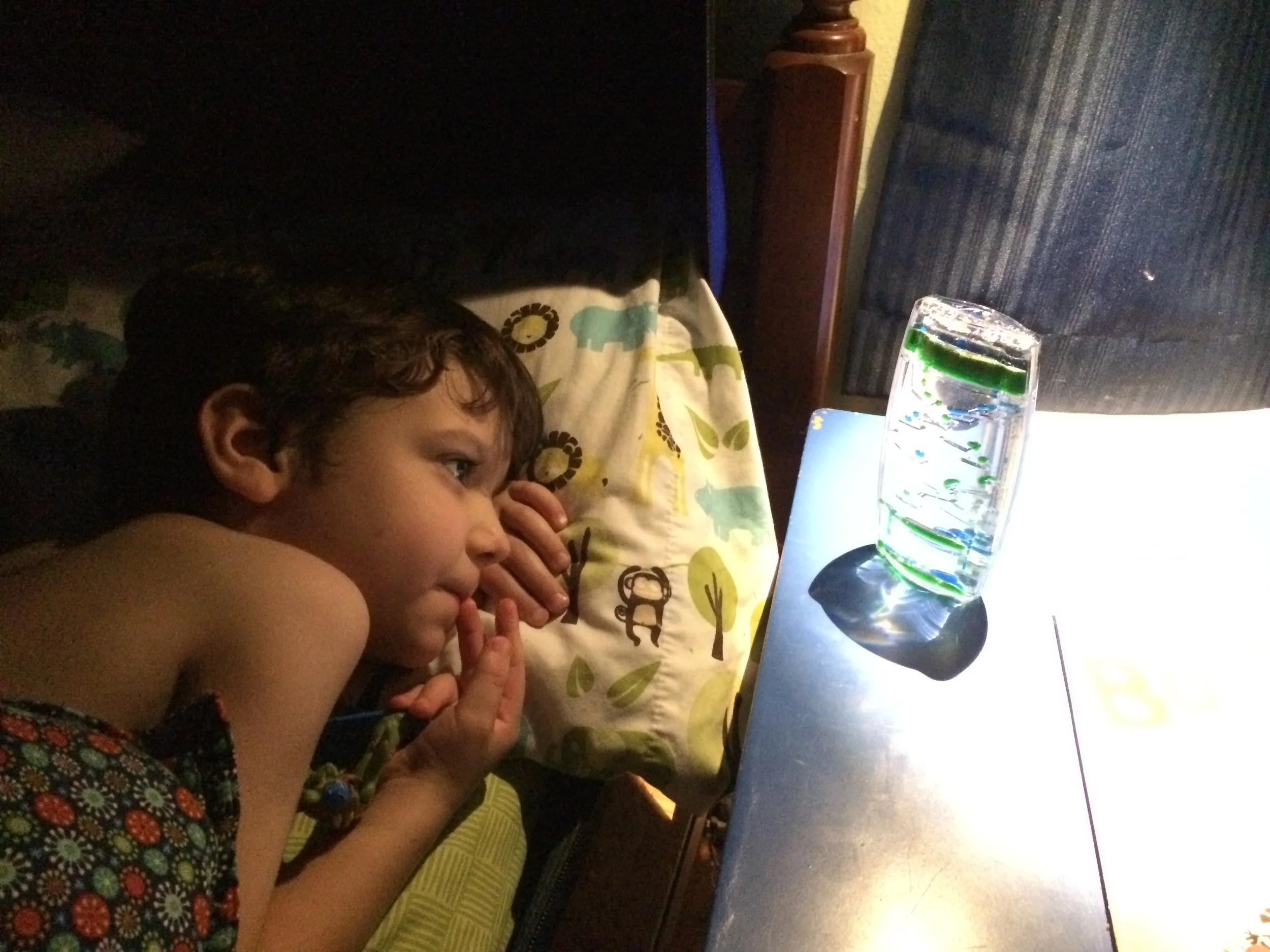
Here he is using it during bedtime
He could sit and watch the colorful drops slowly move through the timer again and again.
There was something predictable and soothing about the movement.
When so much of travel involved waiting and uncertainty, the timer provided a quiet moment of focus and calm.
What surprised me most was that some of the simplest tools were often the most effective.
Supporting Regulation Through Deep Pressure
Another strategy that helped my son was gentle joint compression.
When he became overwhelmed, I would provide compression to his fingers, hands, and arms.
For him, this input helped his body feel more organized and calm.
Every child responds differently to sensory strategies, but many children benefit from deep pressure, movement, or proprioceptive input. Occupational therapists can be wonderful partners in helping families discover what works best for their child.
Interestingly, this is something my son still occasionally asks for as a teenager.
Giving Yourself Permission to Adapt
One thing I wish I had known sooner is that it’s okay to travel differently.
Sometimes we boarded early.
Sometimes we took extra breaks.
Sometimes we packed more than other families.
Sometimes we chose the route that worked best for our child rather than the most convenient option.
Supporting a child’s sensory needs isn’t spoiling them. It isn’t lowering expectations.
It is recognizing that different nervous systems may need different supports.
What I Learned
Looking back, I don’t think there was one item that made travel successful.
It was having a plan.
I knew what helped when my son needed engagement.
I knew what helped when he needed calming.
I knew what helped when the environment became too overwhelming.
Travel wasn’t always easy, but it was possible.
Most importantly, I learned that understanding my child mattered more than following someone else’s idea of what travel should look like.
Every child is different.
The goal isn’t to create the perfect trip.
The goal is to help your child feel safe enough to experience the world alongside you.