
When Your Child Needs Testing: How to Get Through the Appointments, Evaluations, and Waiting
There are moments in parenting when life quietly shifts.
Maybe it begins with a concern you cannot fully explain. Maybe your child is struggling with sleep, communication, sensory sensitivities, attention, feeding, behavior, or development. Maybe you hear phrases like:
“We should probably evaluate further.”
“Let’s schedule additional testing.”
“We recommend a specialist.”
And suddenly, your calendar fills with appointments.
Developmental pediatricians.
Sleep studies.
Therapy evaluations.
Neurology appointments.
School meetings.
Waiting lists.
No one really prepares parents for how emotionally exhausting this process can become.
You are trying to help your child while also managing paperwork, insurance, scheduling, uncertainty, and your own emotions. At times, it can feel like you have quietly become your child’s full-time case manager.
And if your child has sensory sensitivities, anxiety, autism, ADHD, or developmental differences, even the testing itself can feel overwhelming.
I know this firsthand.
The Emotional Weight Parents Carry
One of the hardest parts of this journey is the waiting.
Waiting for appointments.
Waiting for answers.
Waiting for reports.
Waiting for someone to finally understand your child.
Parents often carry an invisible mental load during this time. You may constantly replay conversations in your mind, wonder if you are doing enough, or feel guilty for feeling exhausted.
At the same time, your child is still your child.
They still want comfort, routines, play, safety, and connection.
Sometimes the greatest challenge is figuring out how to help them through experiences that feel unfamiliar, overstimulating, or even frightening.
Preparing for Testing Can Make a Huge Difference
One thing I learned over time is that preparation matters.
Not because we can remove every challenge, but because familiarity often reduces fear.
When my son needed a sleep study, among many other tests, I knew the experience could be very difficult for him because of his sensory sensitivities. There would be wires attached to his body, unfamiliar people, changes in routine, and sleeping in a new environment.
So before the appointment, I connected with the Child Life Therapy department at the hospital.
That became one of the most helpful decisions we made.
The Child Life Therapist provided a social story explaining what would happen during the sleep study. We read through it together beforehand so he could begin to visualize the experience and know what to expect.
The social story even included pictures of the room where he would stay.
For many children, seeing the environment ahead of time can reduce a tremendous amount of anxiety. The unknown often feels much bigger than the reality.
I also prepared comfort items and activities that I knew helped regulate him:
favorite toys
coloring pages
familiar calming items
his weighted blanket
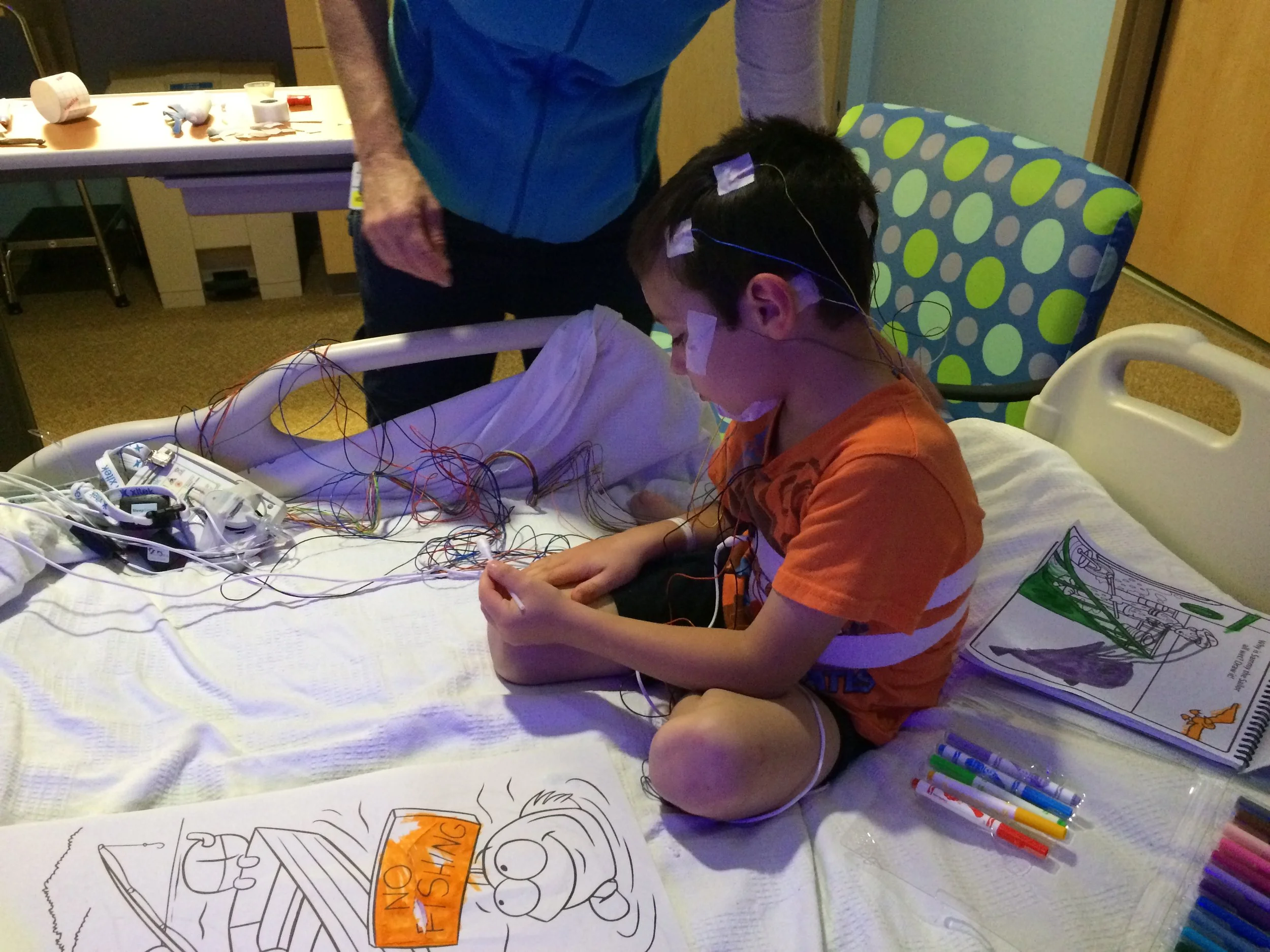
During the study, I stayed with him and helped redirect and distract him while the medical staff applied the sensors and equipment. Before they started, I let them know his triggers. And they involved him in the process giving him choices and allowing him to take breaks.
The hospital also had a bubble tube sensory light (A Vecta Machine) in the room with moving water and changing colors. Watching the bubbles helped capture his attention and created a calming focal point during parts of the process that were uncomfortable for him.
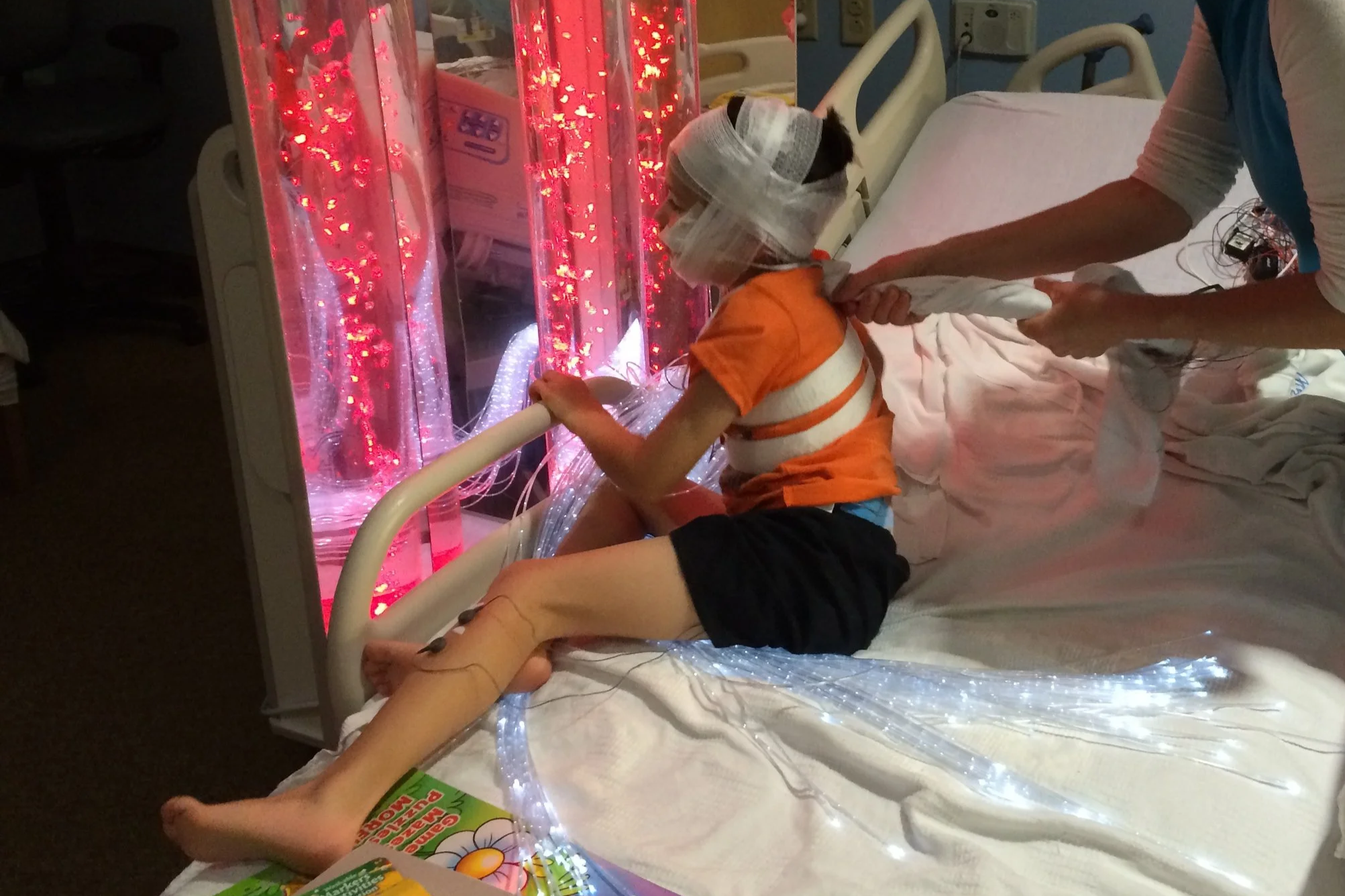
None of these things “fixed” the difficulty completely.
But they helped.
And sometimes helping a child feel even 20% safer or calmer can completely change how an experience unfolds.
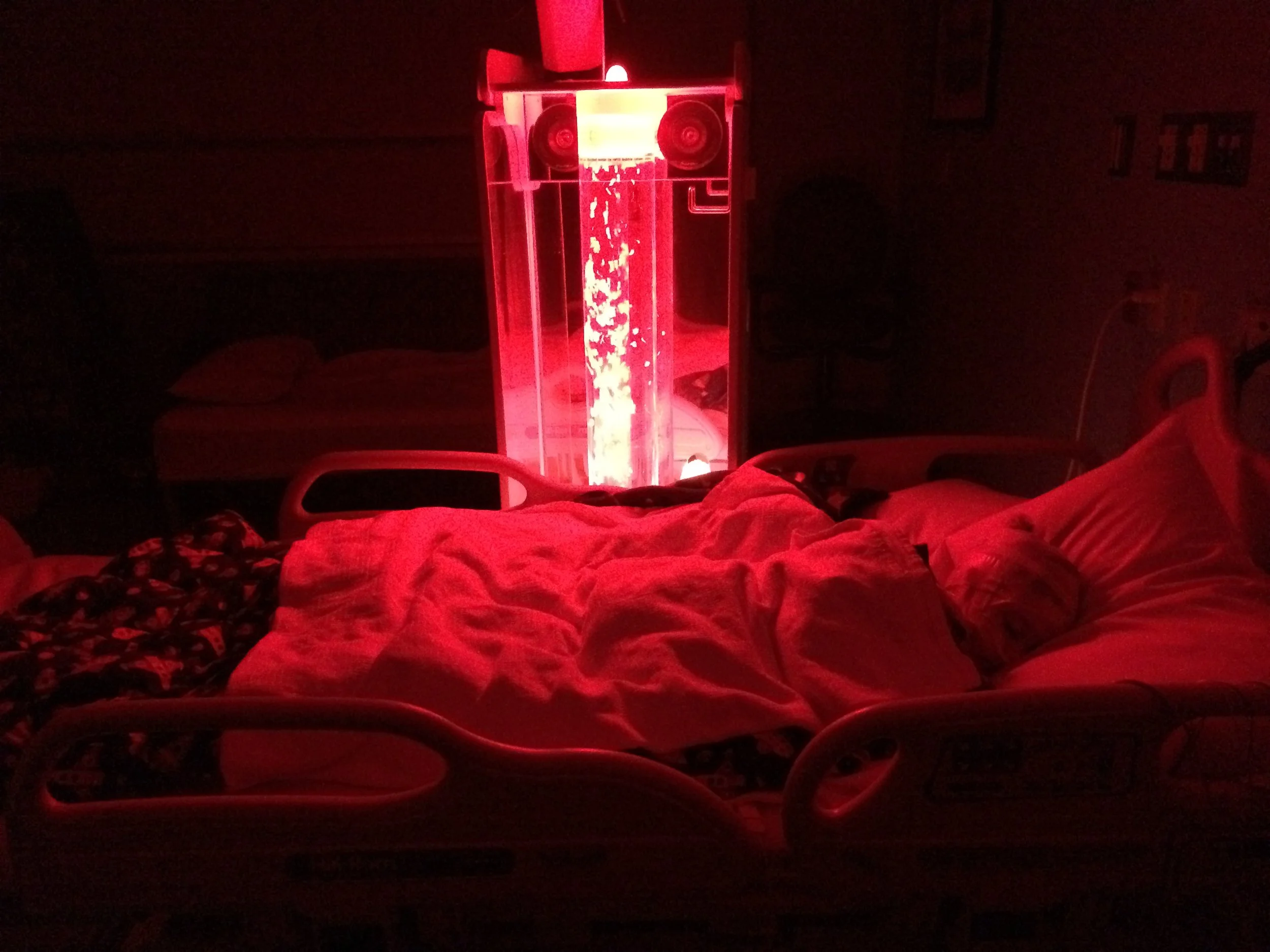
Somehow he slept, and we both made it through.
Practical Ways to Help Your Child Through Medical Testing and Evaluations
Every child is different, but these strategies may help:
Ask if the hospital has Child Life Specialists
Many hospitals have Child Life professionals who help children prepare for medical procedures and testing through play, social stories, visuals, and coping strategies.
Parents are often unaware this support exists.
Use social stories and pictures
If possible, show your child:
pictures of the building
the room
medical equipment
or simple step-by-step visuals explaining what will happen
Predictability can reduce anxiety.
Bring regulating comfort items
Think about what helps your child feel safe and grounded:
weighted blankets
favorite stuffed animals
fidgets
headphones
sensory toys
snacks
coloring books
familiar music
These are not “spoiling” tools.
They are support tools.
Let staff know what helps your child
You know your child best.
Tell providers:
what triggers distress
what calms your child
how your child communicates discomfort
whether transitions are difficult
if touch or noise is especially challenging
Small accommodations can make a significant difference.
Prepare yourself, too
Parents often enter these appointments carrying anxiety, grief, exhaustion, and hope all at once.
Bring water.
Bring snacks.
Write questions down beforehand.
Take notes during appointments because stress makes it harder to remember information later.
And if you leave feeling emotionally drained, that does not mean you are weak.
It means you care deeply.
Your Child Is More Than the Testing
This part matters most.
Your child is not a checklist.
Not a report.
Not a diagnosis.
Not a collection of appointments.
They are still the same child who laughs at certain sounds, loves certain textures, notices tiny details, seeks comfort in familiar routines, and wants connection.
Testing can provide helpful information and support.
But a diagnosis, a label, should never become the entire story of who your child is.
For the Parent Reading This
If you are currently in the middle of evaluations, referrals, waiting lists, or endless appointments, I want you to know something:
You do not have to have every answer right now.
And you are not failing because this feels hard.
Many parents are quietly walking this same road, trying their best to help a child they love deeply.
One appointment at a time.
One day at a time.
And sometimes, even bringing a weighted blanket, coloring pages, and a little preparation can help create a better experience for both of you.