
The Bed Tent That Changed Our Nights
When my son was young, sleep was hard.
Really hard.
He didn’t consistently sleep through the night until he was five years old. Bedtime often felt like a marathon. There were frequent wake-ups, long stretches of restlessness, and many nights when it seemed like his body simply couldn’t settle.
At the time, we didn’t fully understand everything his nervous system was trying to tell us.
What we did know was that he experienced the world intensely.
He noticed sounds that others ignored. He reacted to sensory input that most people barely registered. His body seemed to stay alert long after the rest of the house had quieted down.
Like many parents, we spent years trying different strategies and learning through trial and error.
One of the biggest lessons came when we stopped focusing solely on sleep and started focusing on regulation.
Looking for Clues
When I look back now, I can see patterns that I didn’t fully recognize at the time.
My son often sought out small, enclosed spaces.
He built forts.
He hid under blankets.
He squeezed himself between couch cushions.
He wasn’t trying to isolate himself.
He was creating spaces that felt safe.
Places where the world became quieter, darker, and more predictable.
His nervous system seemed to relax when visual input was reduced and when he felt physically contained.
Those observations eventually led us to create more intentional sensory spaces at home.
The Bed Tent
One of the tools we introduced was a bed tent. The brand we bought was Privacy Pop Bed Tent.
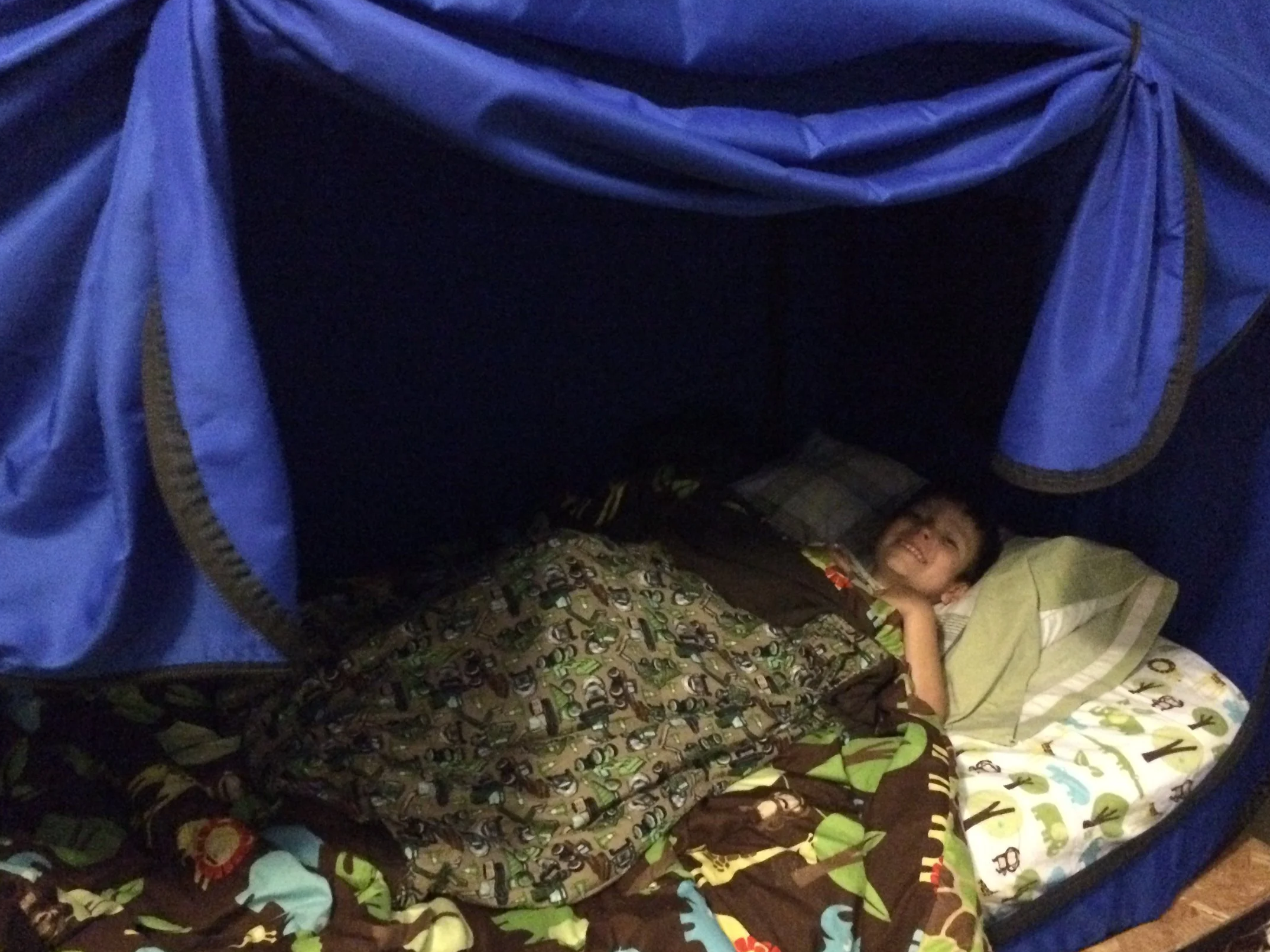
At first glance, it looked like a simple tent placed around a bed.
For my son, it became much more than that.
The tent reduced visual distractions.
It created a smaller, more predictable environment.
It offered a sense of privacy and security.
Most importantly, it gave him a space that felt like his own.
The tent didn’t magically solve every sleep challenge overnight.
But it helped.
And sometimes helping is exactly what a child needs.
Instead of asking his nervous system to relax in a large, open room filled with sensory information, we created a smaller space where relaxation felt more possible.
This was supported with bath time before bed, low lighting, a weighted blanket, water timer, and Laurie Berkner Lullabies.
Creating Safe Spaces
The bed tent was only one piece of the puzzle.
Over time, we noticed that my son gravitated toward other sensory retreats as well.
We added a hanging sensory pod chair to his room.
He loved climbing inside and gently rocking.
Sometimes he would sit quietly.
Sometimes he would simply retreat there after a busy day.
Other times, he sought deep pressure.
I remember finding him tucked between couch cushions or asking to be buried beneath pillows and bean bags.
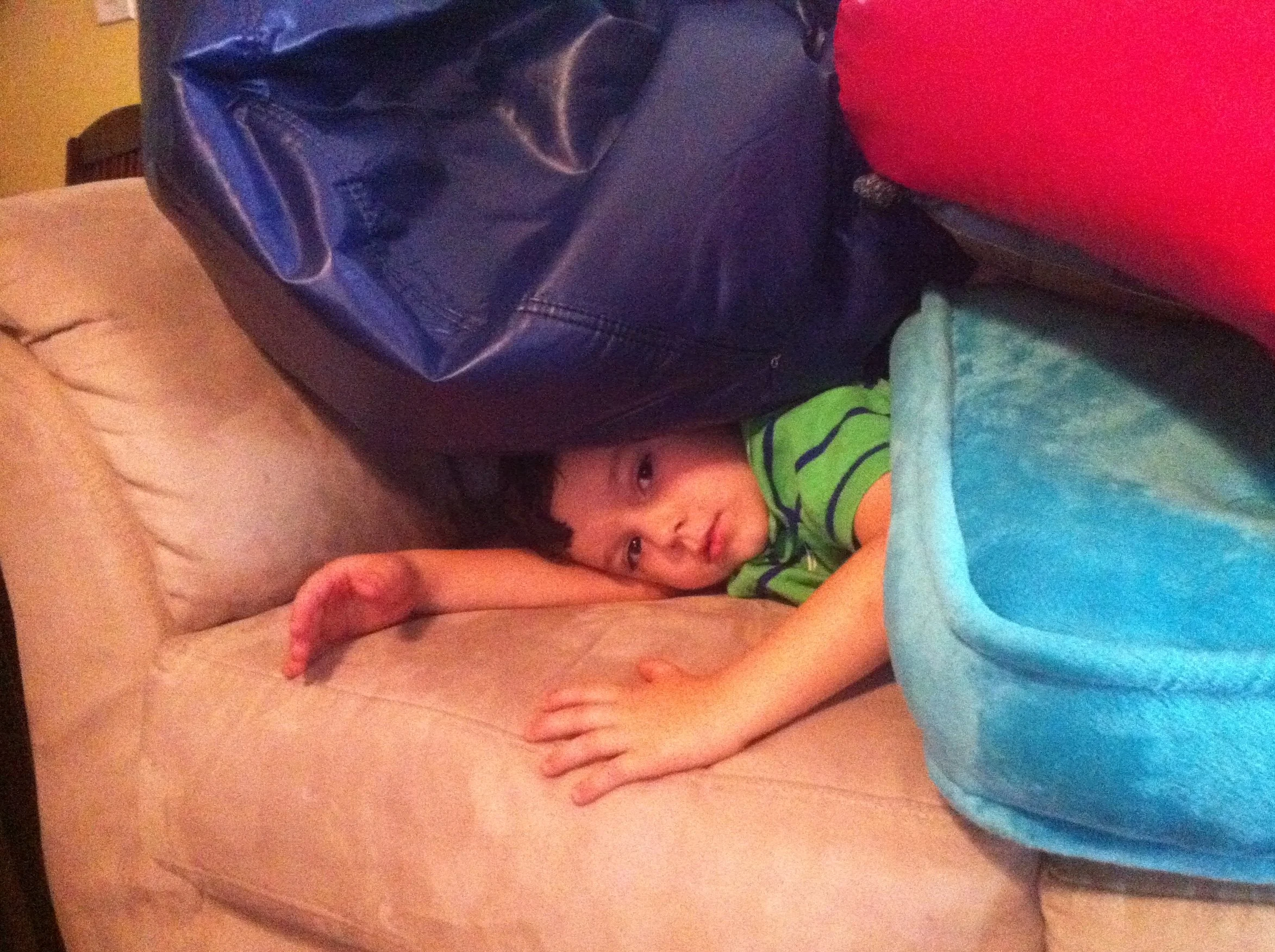
To an outsider, it might have looked uncomfortable.
To him, it seemed calming.
These spaces provided something that many children with sensory differences seek: a way to reduce incoming sensory information and feel more grounded in their bodies.
The Little Things That Helped
Some of the most effective calming tools were surprisingly simple.
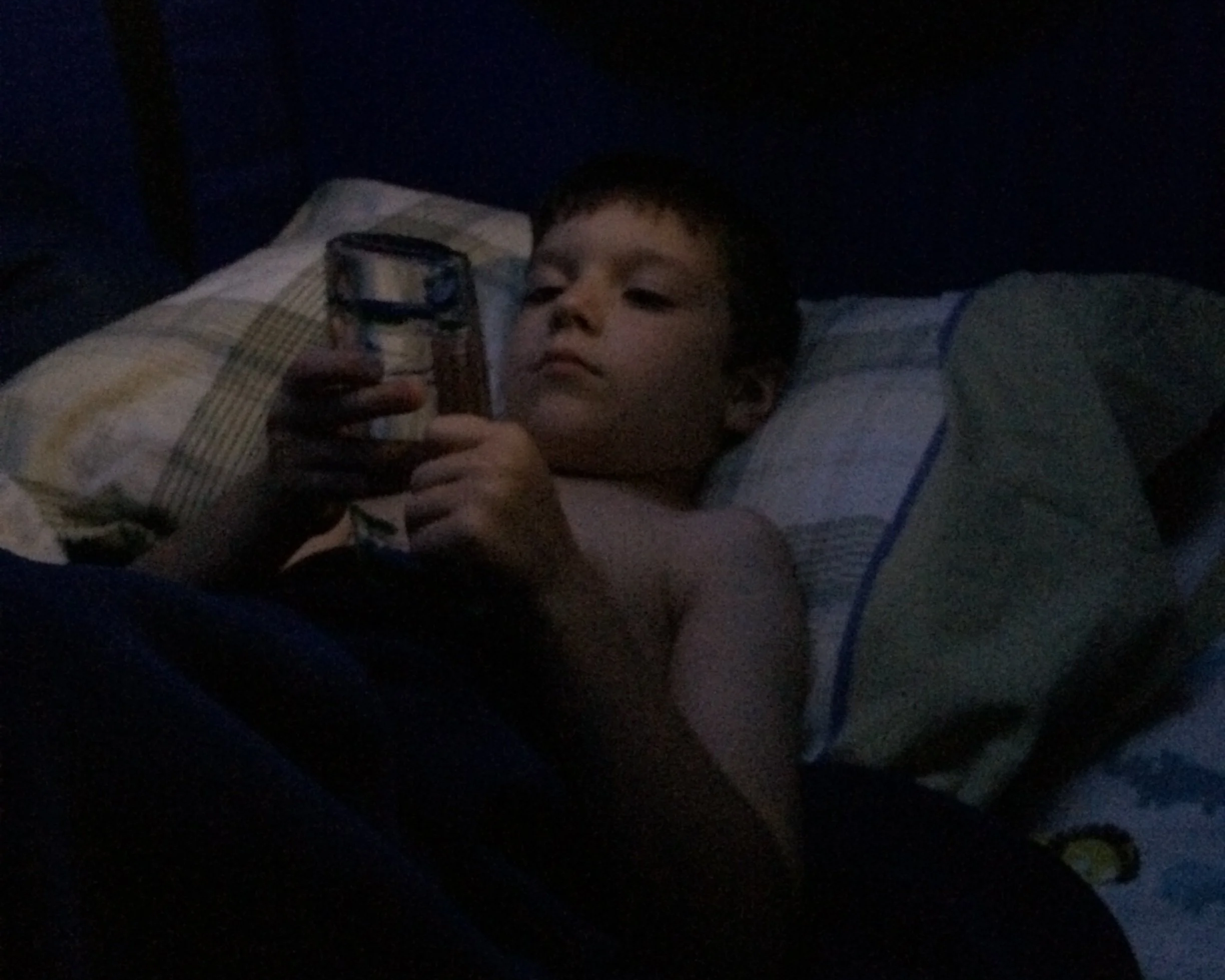
One of my son’s favorites was a liquid motion timer.
He could sit and watch the colored drops slowly move through the timer again and again.
The movement was predictable.
The pace was slow.
There was nothing to figure out or respond to.
It simply invited him to pause.
At bedtime, moments like these helped create a bridge between the activity of the day and the rest that was still difficult for him to find.
Learning to Follow His Lead
One thing I have learned as a parent is that children often tell us what they need long before they have the words to explain it. We also learned a great deal through working with our occupational therapist, who helped us better understand some of the sensory patterns we were seeing.
My son was showing us.
He sought enclosed spaces.
He sought deep pressure.
He sought opportunities to reduce sensory input.
He was giving us clues.
Once we started paying attention to those clues, we became better at creating environments that supported him.
Not every child will benefit from a bed tent.
Not every child will enjoy a sensory pod chair.
Not every child seeks deep pressure or enclosed spaces.
But many children have their own unique ways of telling us what helps them feel safe.
Our job is not to force every child into the same solution.
Our job is to become curious.
What Changed
The bed tent did not cure sleep difficulties.
The pod chair did not eliminate sensory overload.
The liquid timer did not solve every bedtime struggle.
But together, they helped us create an environment that felt safer and more supportive for our son.
Over time, bedtime became less about trying to make sleep happen and more about helping his nervous system find calm.
Looking back, I don’t think the biggest change was the tent itself.
The biggest change was learning to see what our son was already trying to tell us.
He wasn’t being difficult.
He wasn’t refusing to settle.
He was searching for ways to feel safe, regulated, and comfortable in a world that often felt overwhelming.
Once we understood that, everything began to look a little different.
And our nights became a little easier.