
Meeting My Mother Where She Is
Before my mom developed dementia, she lived on a lake.
Every morning, she would wake up early and sit in the hot tub on her back porch. She always brought a hot dog with her.
Not for herself.
For Big Bird.
Big Bird was a great blue heron that visited almost every morning. As soon as he landed nearby, he would squawk, announcing his arrival. My mom would laugh, toss him pieces of hot dog, and watch him catch them.
She talked about him like an old friend.
To be honest, there were probably several different herons over the years. Some were larger than others. But to my mom, they were all Big Bird.
It became part of her daily routine. Part of her story.
Birds have always brought her joy. She kept bird feeders filled, watched ducks gather by the lake, and could spend long stretches of time simply observing the wildlife around her home.
Eventually, we had to sell the lake house when Mom moved into memory care.
Like many families, there were countless details to manage. The house needed repairs, new flooring, and preparation before it could be put on the market. I found myself going back regularly to meet contractors and oversee projects.
Each time I went, I brought hot dogs.
And each time, before leaving, I would walk out onto the back porch.
Months had passed since Mom had lived there.
Months had passed since she had fed Big Bird.
But one of the blue herons still came.
I would toss pieces of hot dog into the yard, and he would patiently wait for his treat, just as he always had.
Standing there, I couldn't help but think about all those mornings Mom had spent on that porch.
The house was changing.
Her life was changing.
Our family was changing.
But somehow Big Bird was still showing up.
When the house finally sold, I passed along an unusual piece of advice to the new owners.
"Make sure you keep hot dogs in the refrigerator," I told them.
Then I explained about Big Bird.
I like to imagine that somewhere out on that lake, a blue heron is still visiting the back porch, waiting for breakfast and keeping watch over a place that held so many memories.
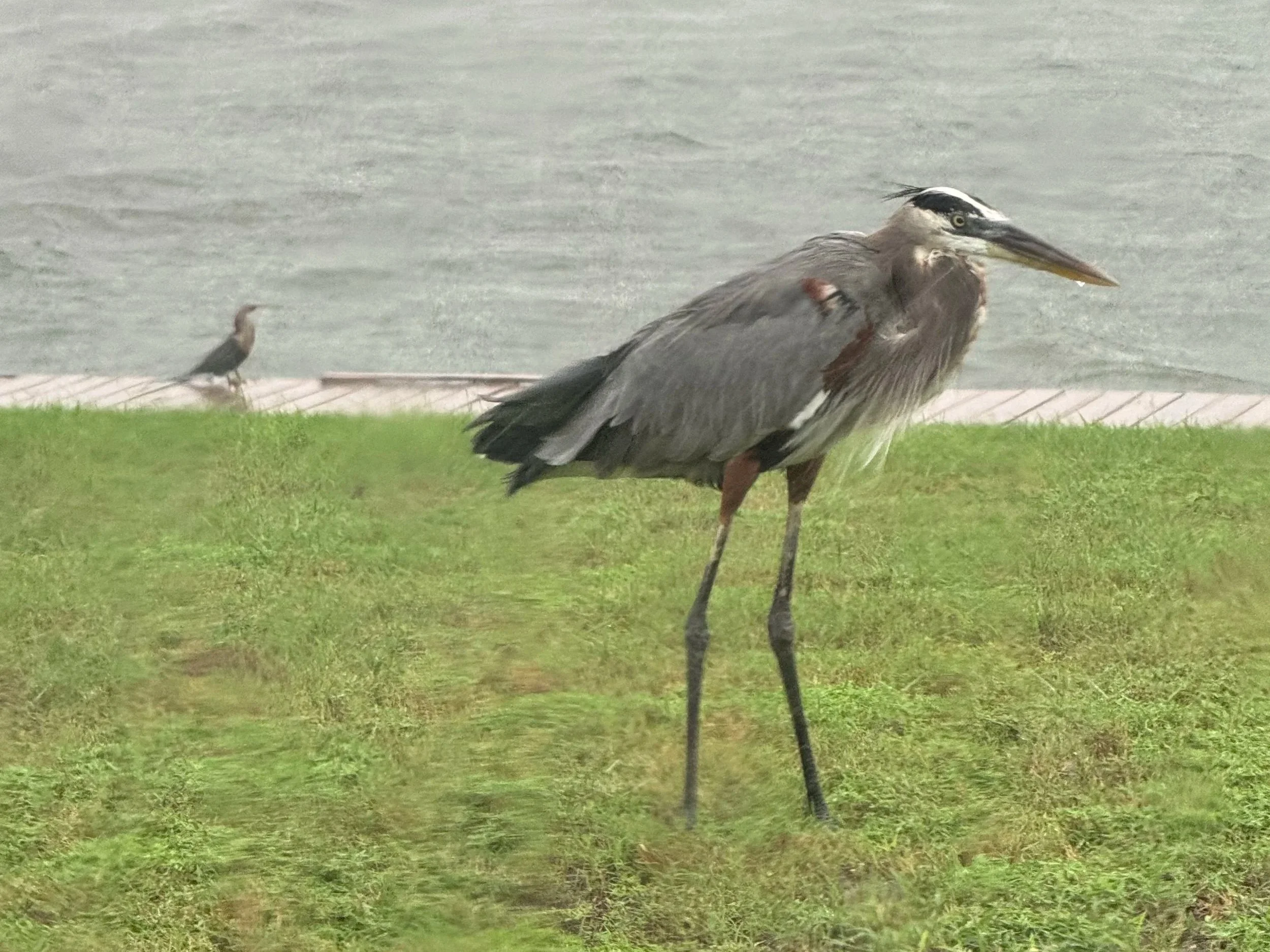
One of the many “Big Birds”
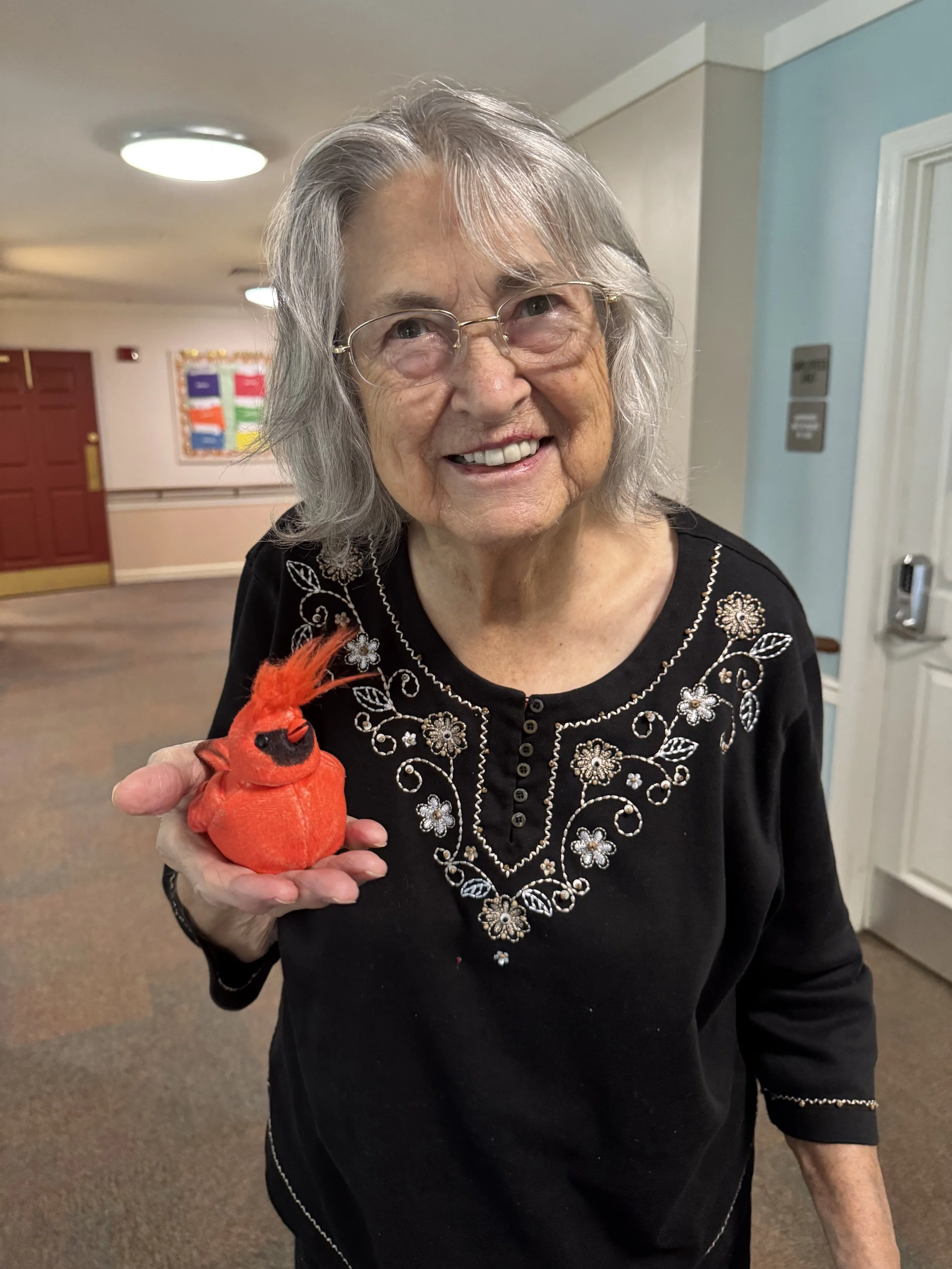
Years later, after dementia entered our lives, my sister discovered a small cardinal that clips onto a walker. When you press a button, it chirps and talks.
We bought one for Mom.
She immediately named it Big Bird.
Today, she carries that little cardinal almost everywhere she goes.
Sometimes it's attached to her walker. Sometimes it's tucked into her pocket. Sometimes she brings it to church. When we're driving together, she'll press the button and smile.
"This bird talks to me and keeps me company," she'll say.
Or, looking out the window, she'll tell me, "Big Bird likes the view."
Somewhere along the way, the little cardinal became more than a toy.
It became a friend.
As dementia changed parts of our relationship, I found myself searching for ways to stay connected to my mom. Like many families, we noticed the changes gradually. Conversations became more repetitive. Details became harder to remember. Stories sometimes blended together.
For so long during visits we played card games and board games. She loved Scrabble and Upwords and claimed to be the champion.
There were moments when both of us felt frustrated by the things that no longer came as easily as they once had.
I found myself wondering what activities would still feel meaningful to her.
What would bring her comfort?
What would be enjoyable without being overwhelming?
What would allow her to feel successful?
The answer turned out to be much simpler than I expected.
Pictures.
Birds she recognized.
Animals she enjoyed.
Large photographs she could look through at her own pace.
No complicated storyline to follow.
No right or wrong answers.
Just familiar images and the freedom to enjoy them.
I started creating books when my Mom’s memory became worse, but it was word find books.
Although she initially enjoyed them, they sat on her table. She no longer understood the goal of the activity she once enjoyed.
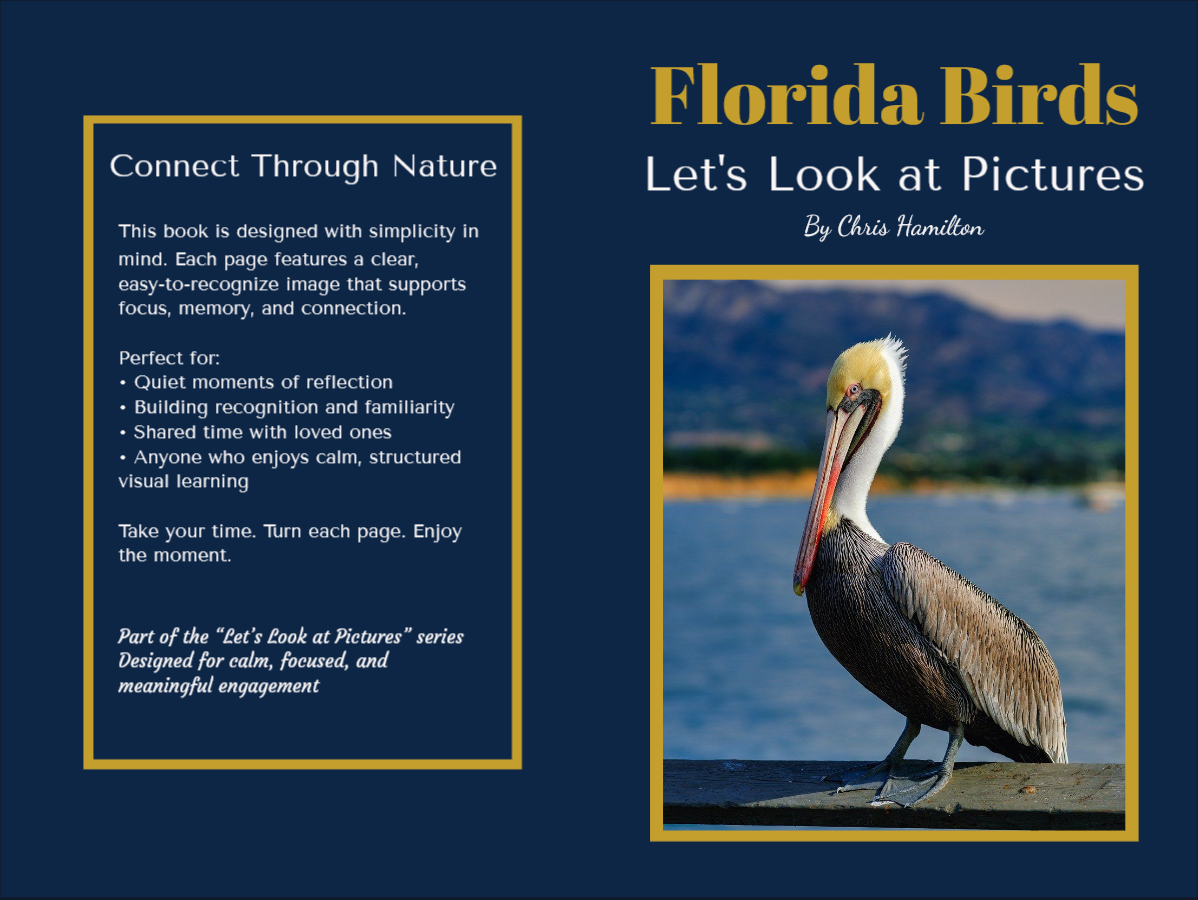
So I created a series of simple book filled with photographs of animals and their names.
Of course, I started with birds.
I simply wanted to give her something connected to a lifelong love that still seemed to bring her joy.
Last Sunday, I went to pick up Mom for church.
She was sitting in the activity room at her memory care community, surrounded by other residents. As I walked in, I noticed she was holding the bird book. I had brought some for the library.
I smiled when I saw her looking at it.
As I helped her stand and gathered her things, one of the employees stopped me.
"Your mom carries that bird all the time."
In a journey that often focuses on what has been lost, that felt like a gift.
That moment reminded me of something important.
Connection doesn't always look the same throughout our lives.
When we're young, connection might be long conversations with our parents. It might be family dinners, shared memories, competitive games of Scrabble, or phone calls waking me up to say good morning.
As our parents age, especially when dementia enters the picture, those forms of connection sometimes change.
But change does not mean connection disappears.
Sometimes connection looks like sitting together and looking through pictures.
Sometimes it looks like listening to familiar music.
Sometimes it looks like attending church together every Sunday.
Sometimes it looks like carrying a favorite book.
Sometimes it looks like a small cardinal named Big Bird.
As caregivers, family members, and loved ones, we often spend a lot of energy grieving what has changed. That grief is real and important.
But I've also learned to pay attention to what remains.
My mom still smiles when she sees birds.
She still enjoys familiar routines.
She still likes going to church.
She still finds comfort in things that feel familiar.
And she still has Big Bird.
Dementia has taught me many things, but one of the most important is this:
Sometimes love means letting go of how things used to be and learning how to connect in new ways.
It means meeting someone where they are today.
Not where they were five years ago.
Not where you wish they could be.
Today.
That is where connection lives.
And sometimes, it begins with something as simple as a bird.